Career Pathway Hub
Bachelor of Design thesis
A desktop and mobile platform helping skilled newcomers re-enter their professions in the GTA.
(01)
Overview
Career Pathway Hub is a desktop and mobile platform designed to help skilled newcomers re-enter their professions in the GTA. It brings personalised career roadmaps, estimated costs and timelines, resources, and mentorship into one guided experience.
The project is personal. As a refugee, I watched my dad build a 25-year engineering career in Saudi Arabia, then struggle to re-enter his field after moving to Canada. Language barriers, licensing, and Canadian experience requirements made him feel as though he had to start over — a story shared by many doctors, lawyers, business owners, and engineers in our community.
(02)
My Role
UX/UI Designer and Researcher
For my Bachelor of Design thesis, I led the project from research and synthesis through information architecture, user flows, wireframes, visual identity, and interface design.
(03)
The Challenge
Skilled newcomers often face complex licensing requirements, unfamiliar credential recognition processes, and limited professional networks. Information is scattered across different services, making it difficult to understand where to begin and what comes next.
(04)
Research
I combined secondary research, a survey of around 30 newcomer professionals, and six in-depth interviews. The secondary research mapped the problem space: credential and licensing barriers, language and networking gaps, Canadian experience requirements, and policy and governmental systems.
Triangulating the survey with the interviews confirmed the recurring barriers: 50% of survey participants found credential recognition an obstacle, 59% reported negative emotions such as discouragement and burnout, and 40.9% did not get the guidance they needed from existing support systems.
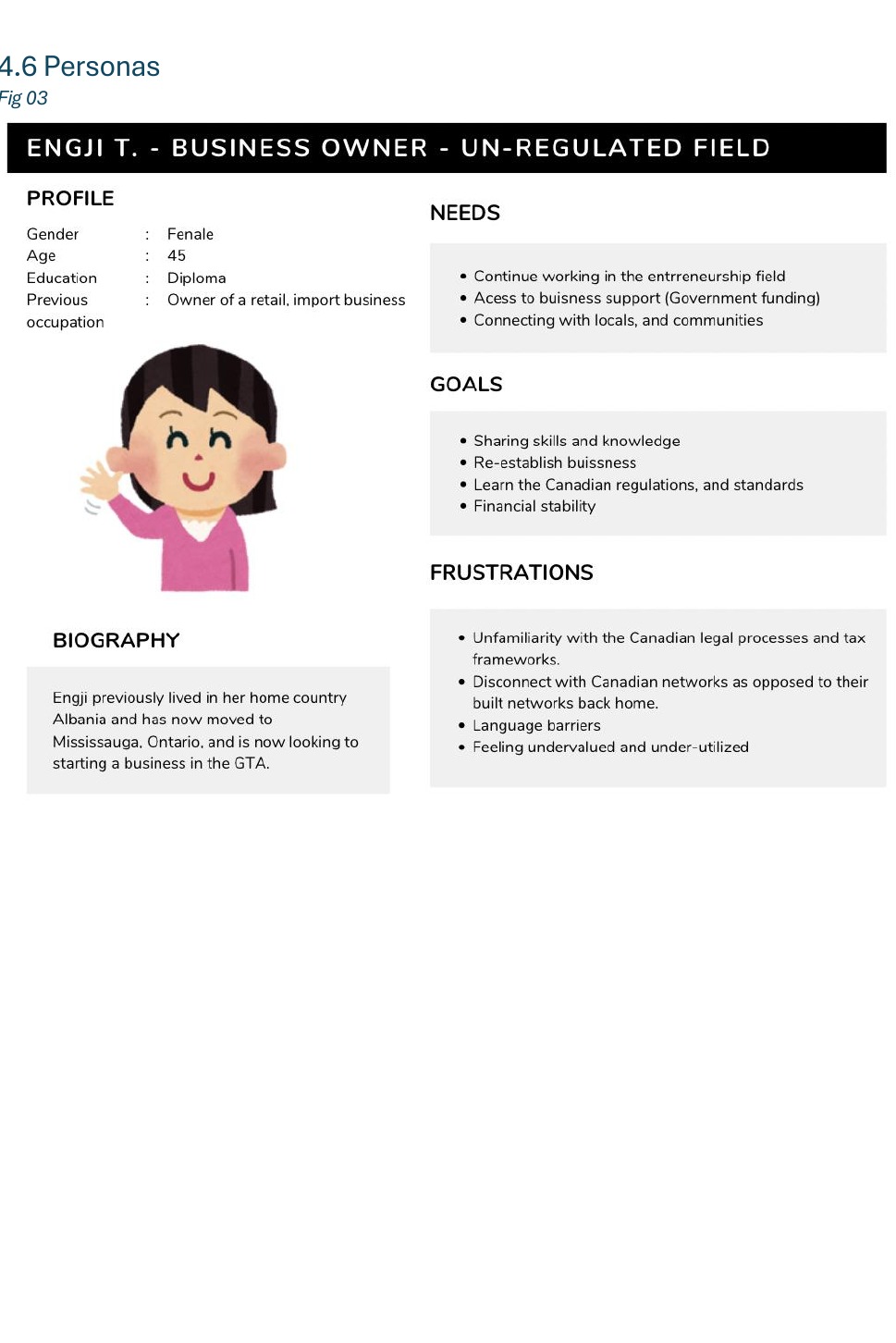
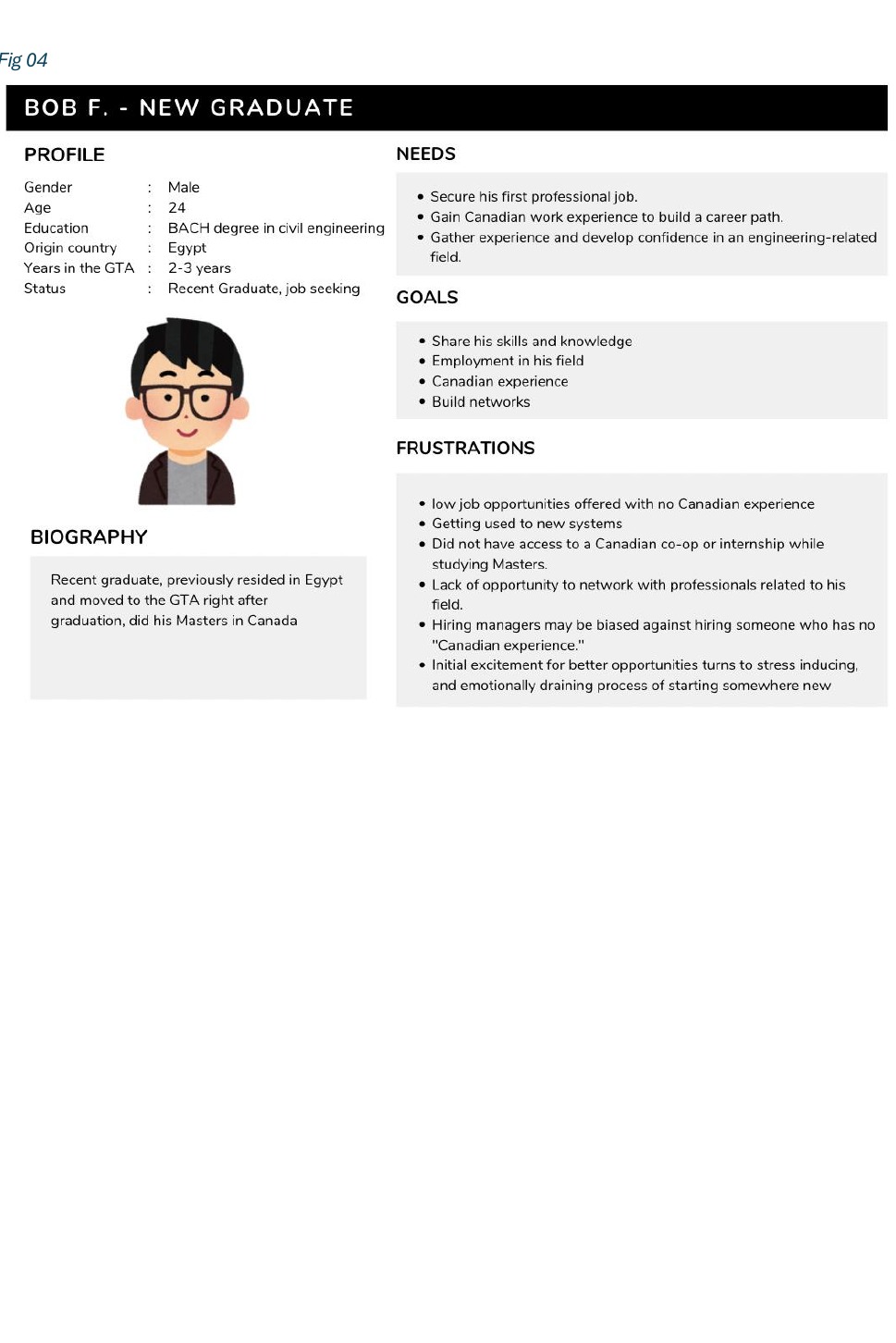
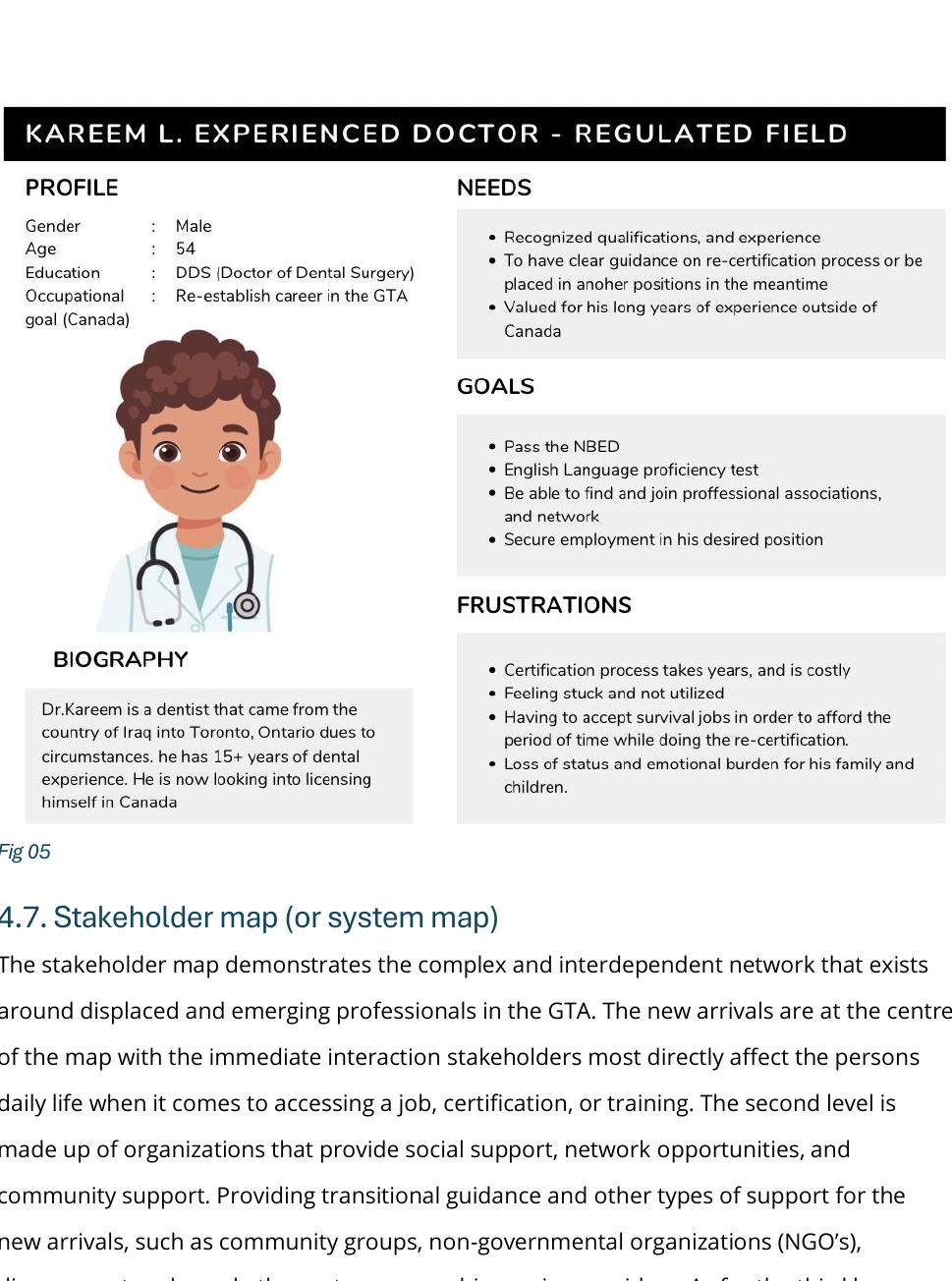
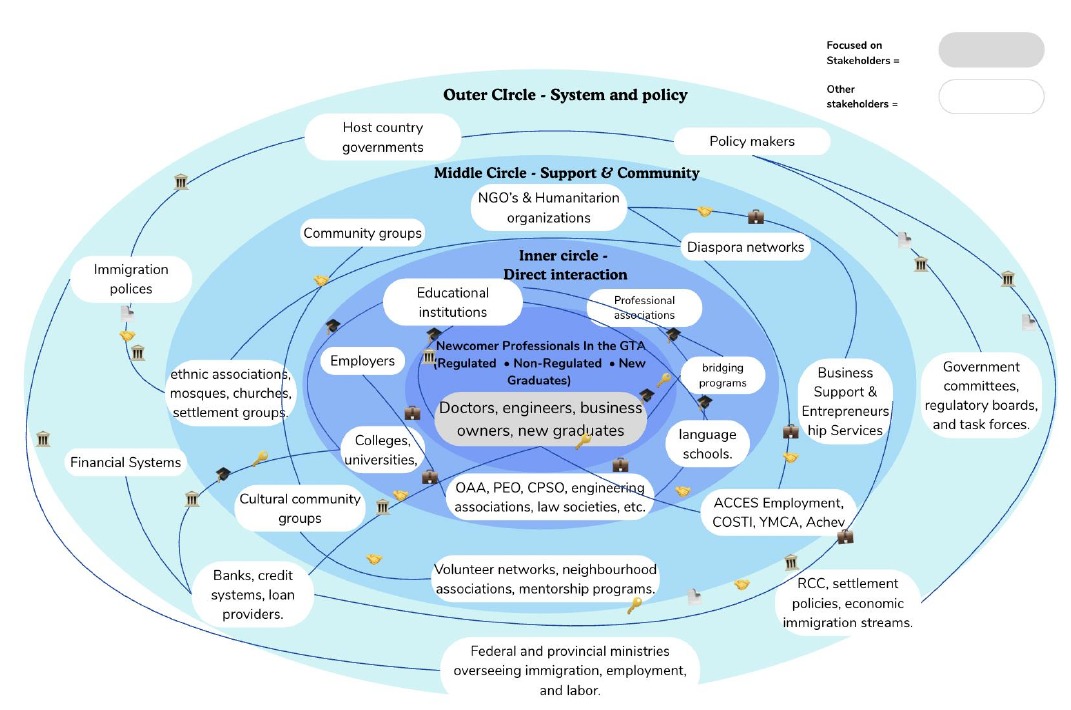
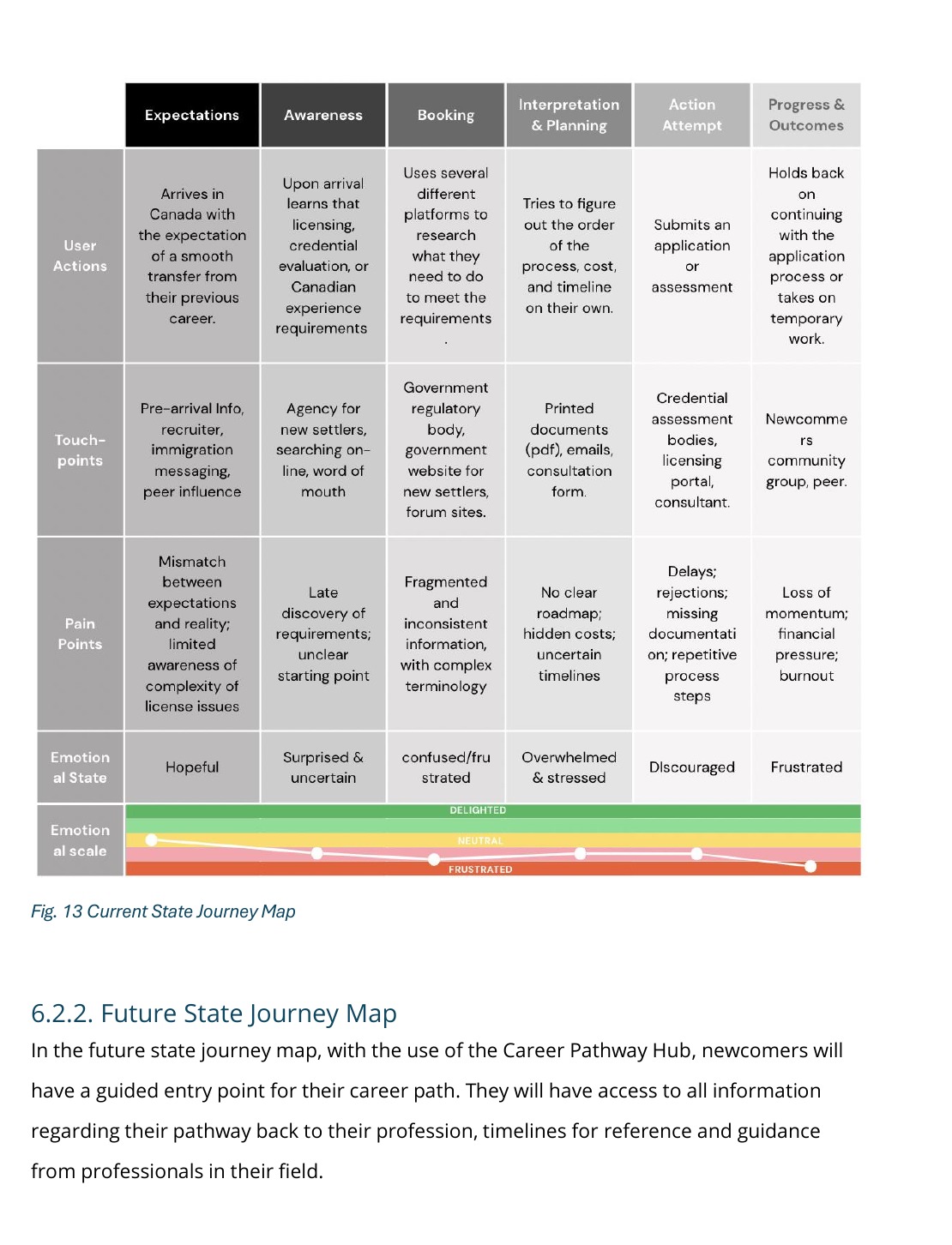
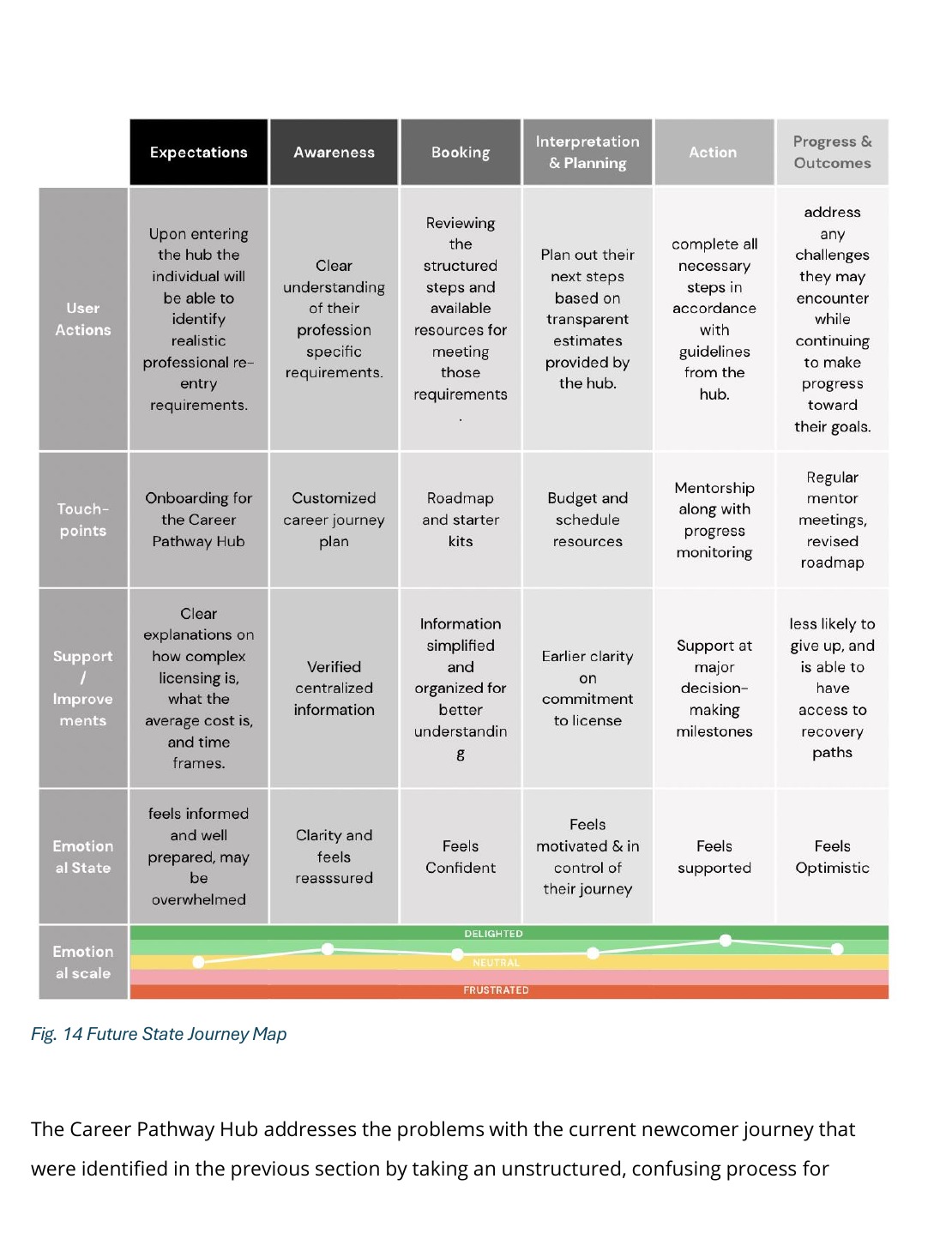
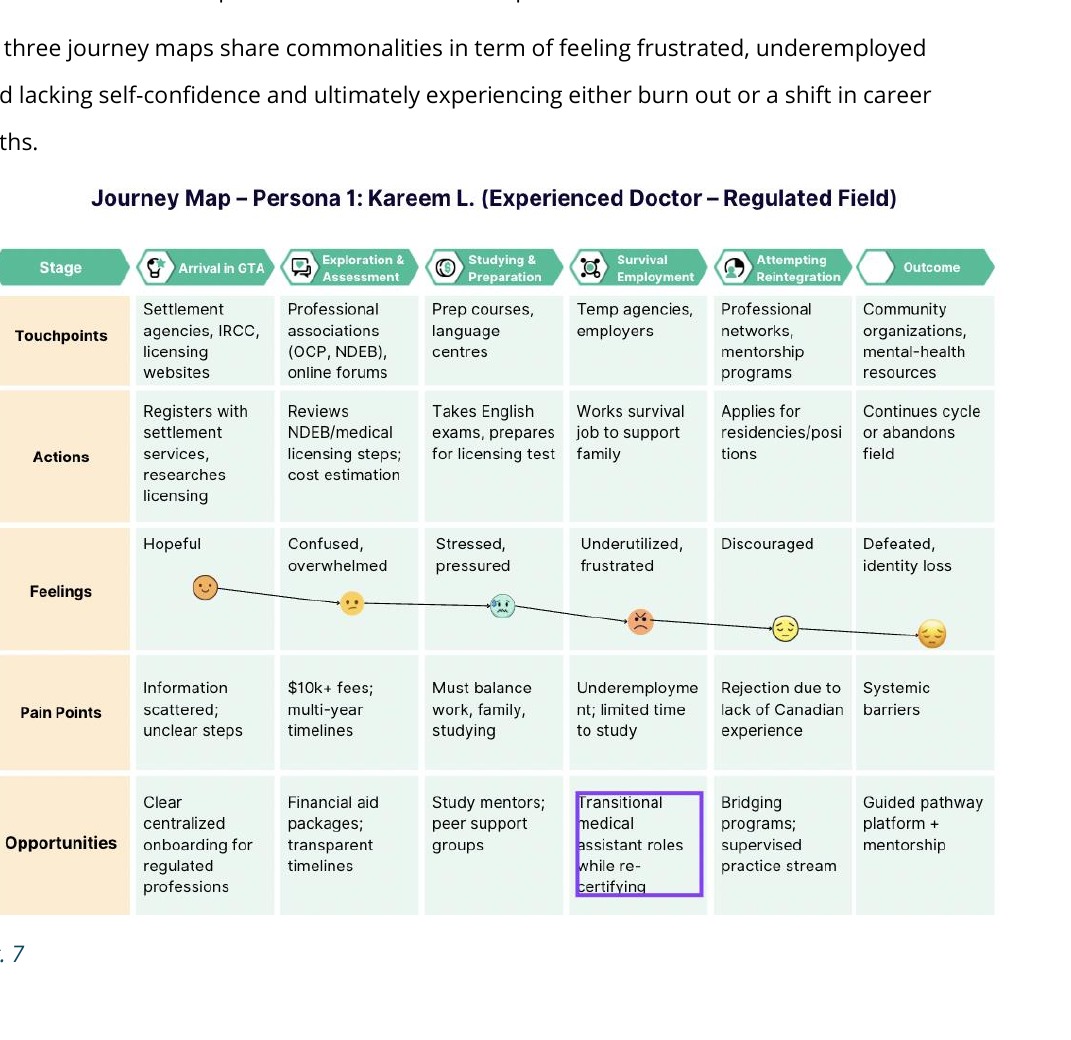
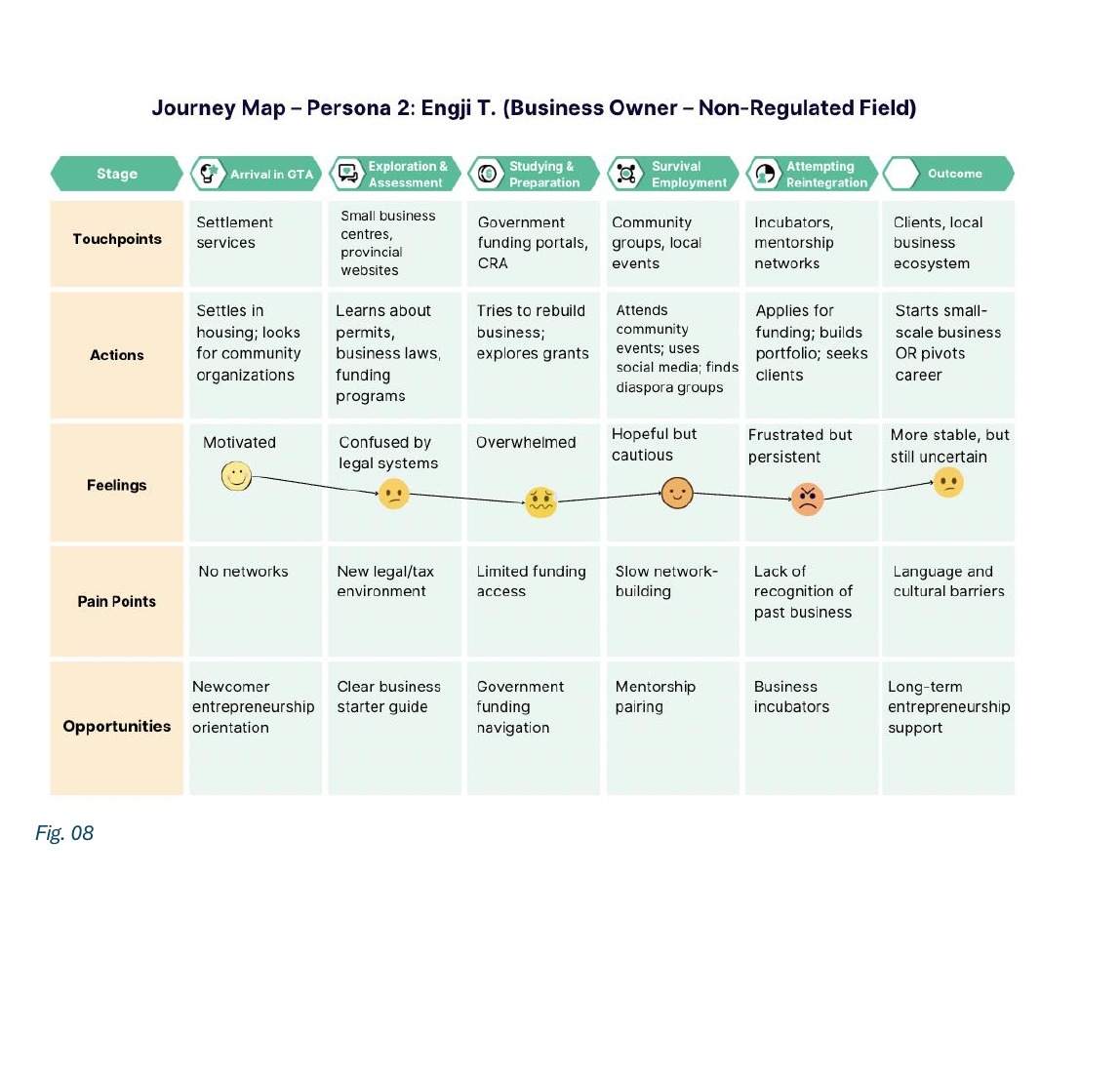
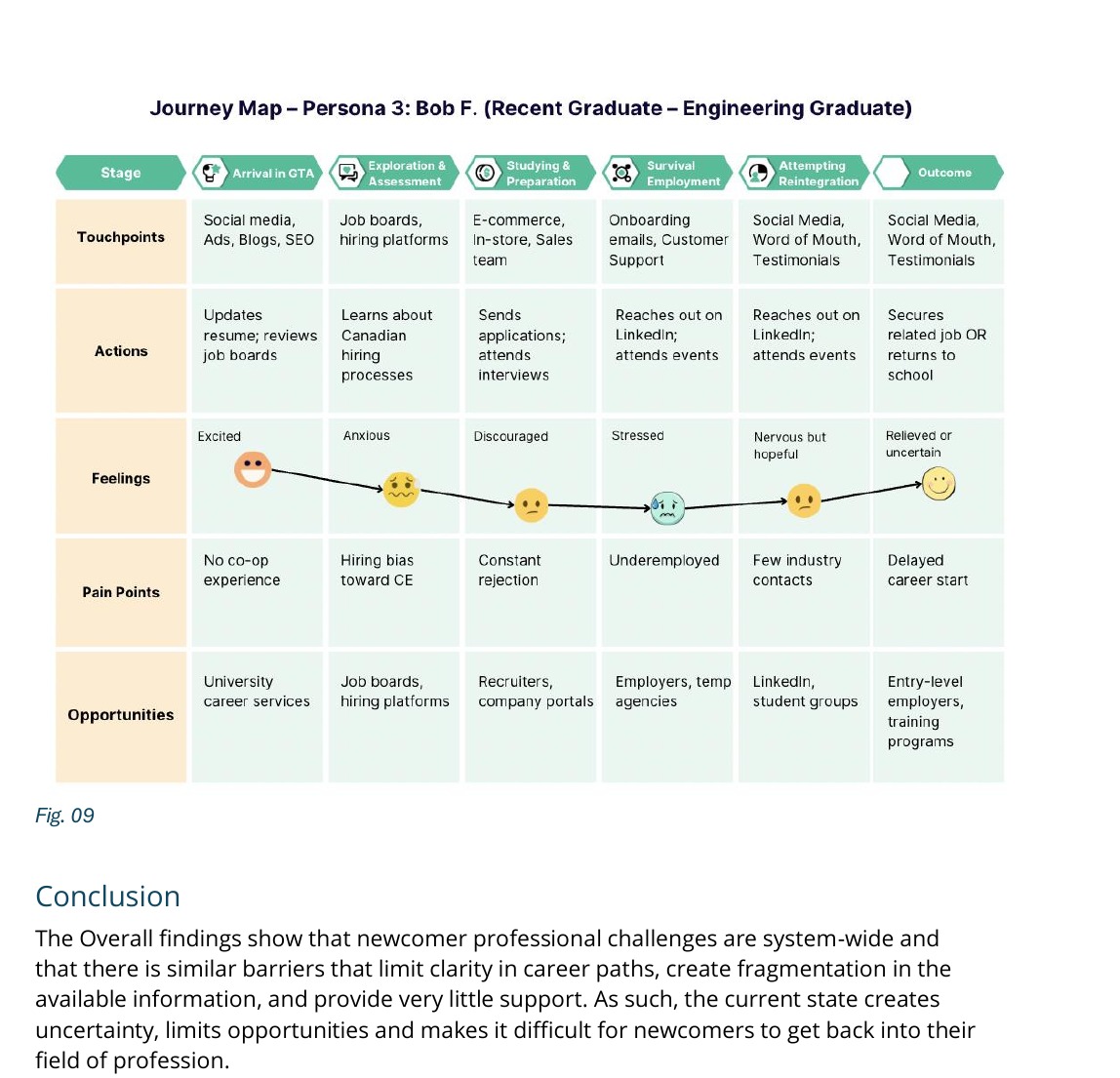
Through thematic coding and affinity mapping, I translated these findings into three personas — an experienced doctor in a regulated field, a business owner in an unregulated field, and a recent graduate — along with a stakeholder map and journey maps for each path.
(05)
Process
From the research, I explored three design directions and validated a centralized career pathway platform as the strongest concept. I structured the platform through an information architecture diagram, user flows, and wireframes covering onboarding, the career roadmap dashboard, cost and timeline estimates, mentorship booking, and starter kits.
Usability testing then drove major revisions: onboarding became a linear, step-by-step flow with progress indicators; the pathway gained an Action Plan so users always know their next step; the confusing “Starter Kit” was repositioned and renamed the Preparation Checklist; a dedicated Cost/Timeline Breakdown page added per-stage transparency; and navigation was reorganized so resources, mentorship, and profile settings are easy to find.
(06)
Key Decisions
A personalised roadmap at the centre
The experience is built around a guided roadmap that makes each next step clear, replacing a fragmented, self-directed search.
Cost and timeline transparency
Per-stage cost and time estimates help users plan their professional re-entry with realistic expectations.
Preparation over jargon
Testing showed “Starter Kit” confused users, so it became the Preparation Checklist — positioned inside the pathway where it belongs.
Mentorship as personal support
Volunteer mentors and progress monitoring connect practical guidance with human support.
A calm, trustworthy visual system
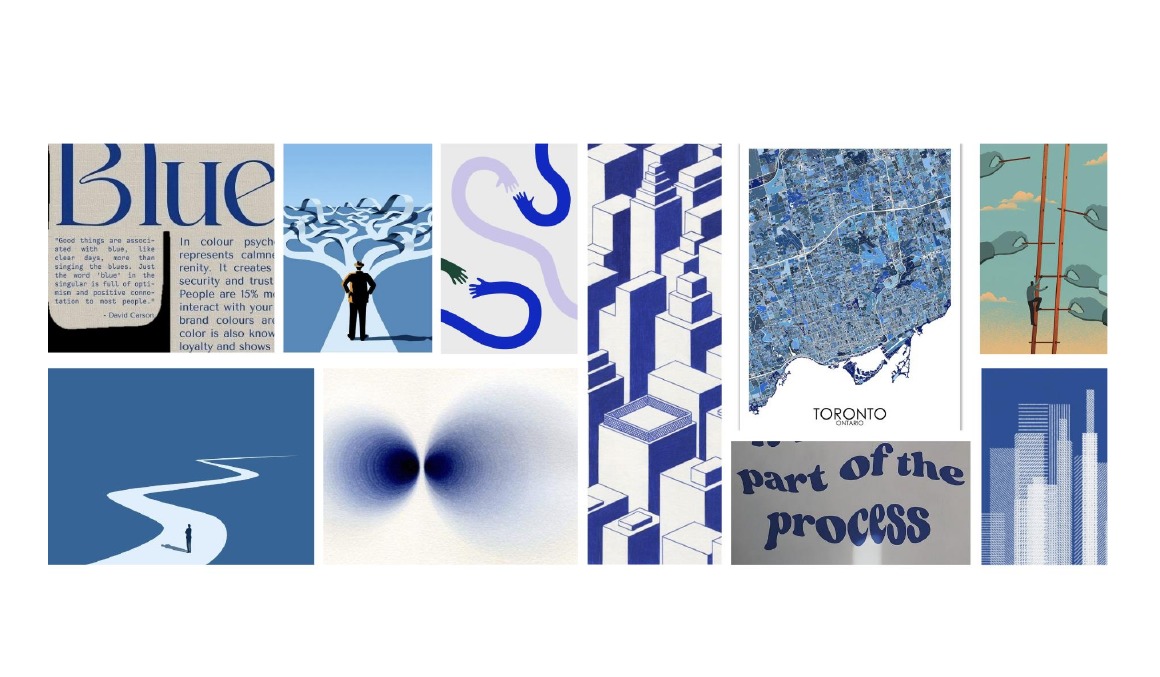
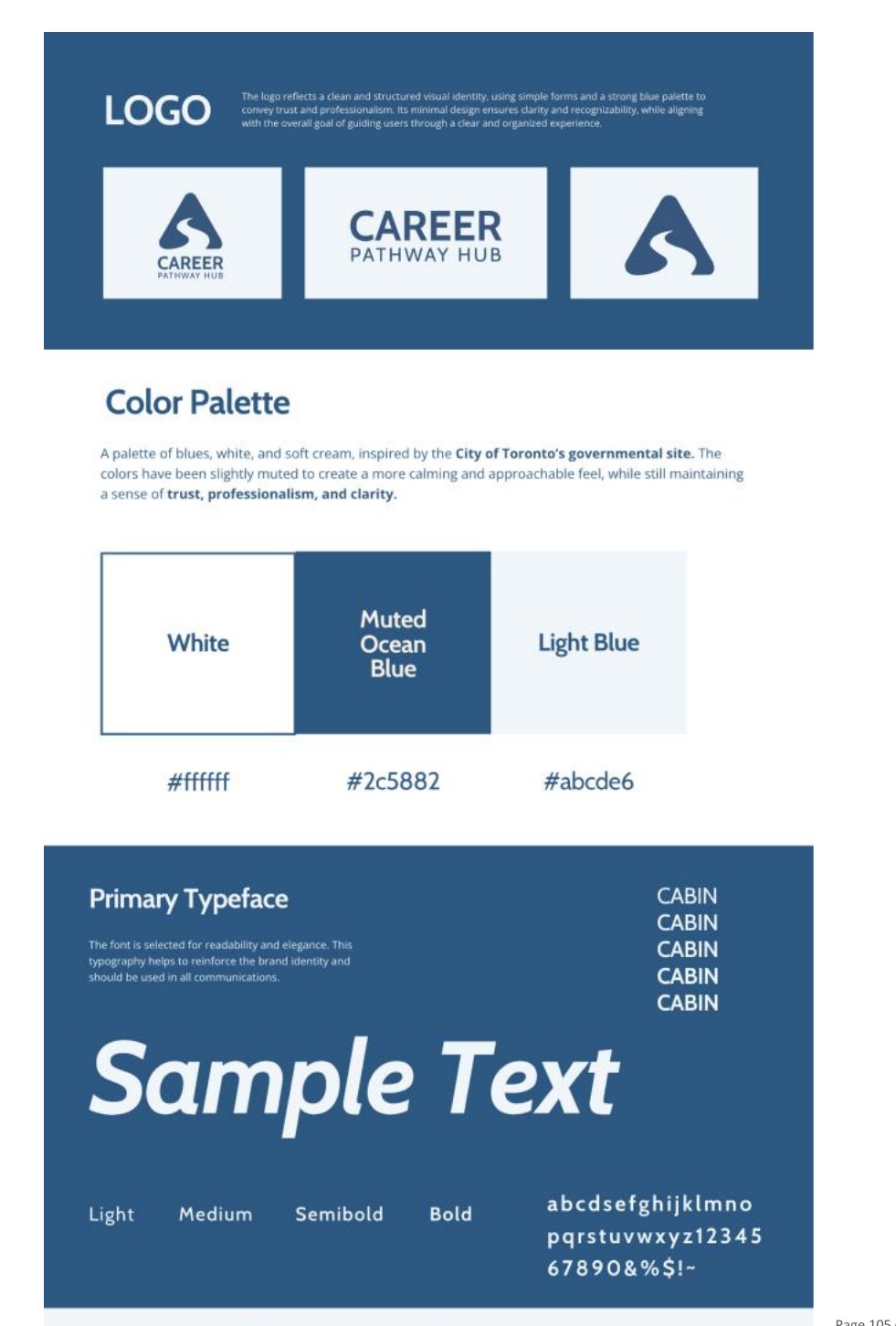
A muted blue palette inspired by the City of Toronto’s governmental site, readable Cabin typography, and consistent components create clarity, structure, and guidance.
(07)
Final Work
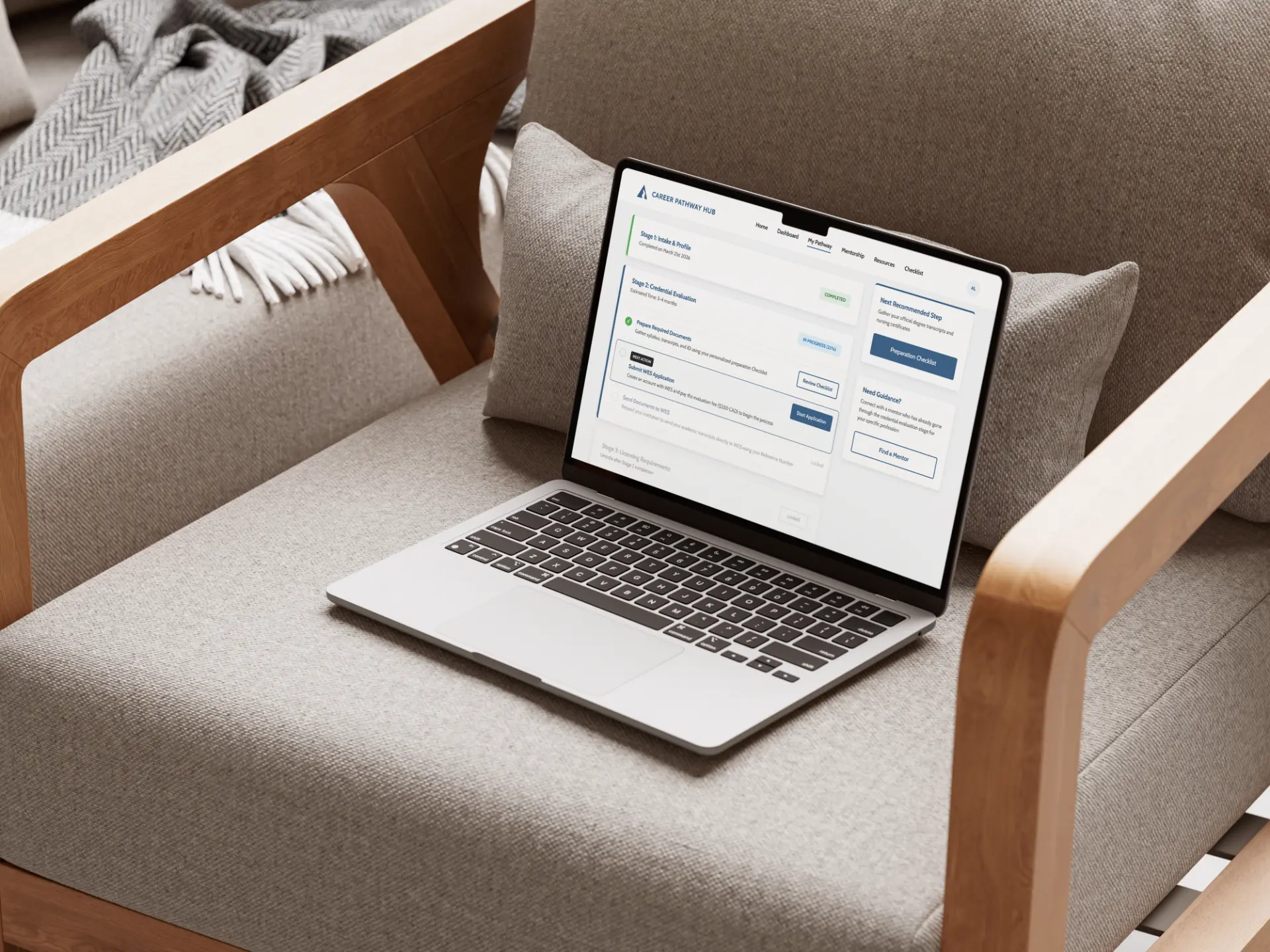
The final design is an interactive website complemented by a mobile app, refined through several rounds of design and usability testing. It brings career planning, progress tracking, cost and timeline estimates, resources, and mentorship together — giving newcomers a clearer understanding of their options and a manageable path towards continuing their careers.